
Why Does Paying Off a Loan Hurt Credit? Key Reasons
Paying off a loan can briefly lower a credit score because the account closes, which can shrink credit mix, reduce average account age, and shift utilization on related revolving accounts. The dip is usually temporary and may reverse within one to two months, even though the borrower's overall debt has improved.
That creates a frustrating moment: the final payment clears, the loan servicer shows a zero balance, and a credit app later reports a lower score. The result feels backward, but it usually isn't a hidden penalty for responsible repayment. The scoring model is reacting to a changed credit file, especially when the paid loan was the only active installment account.
The explanation becomes easier once the file is viewed as a moving profile rather than a simple debt counter. A payoff can affect credit mix, the age of active accounts, and revolving utilization in different ways. Each change may be modest, but the score sees them together.
Table of Contents
- The Moment the Score Drops After Payoff
- How FICO Calculates Your Score
- The Three Scoring Factors a Payoff Hits Hardest
- Real Scenarios That Trigger the Dip
- Moves That Soften or Prevent the Drop
- Planning the Payoff Without Blindsiding Your Score
- Watching the Number Recover and Stay Healthy
The Moment the Score Drops After Payoff
The borrower has just made the final auto loan payment. The account page shows paid in full and a zero balance. Relief arrives first, followed by a quick check of a credit app a week later.
The score is lower than it was last month. The borrower refreshes the app twice, opens the loan servicer's website to confirm the zero balance, and refreshes the credit app again. Nothing changes. The payment went through, so why does paying off a loan hurt credit?
This situation can happen when the account changes from active to closed. FICO explains that paying off the last active installment loan can cause a score loss, because people with no active installment loans can represent higher risk in the model than people still repaying installment debt. The issue isn't that repayment is harmful. The issue is that the file no longer contains the same active account structure.
Three changes usually deserve attention:
- Credit mix becomes thinner: An auto loan, student loan, mortgage, or personal loan may have been the only installment account.
- The active-account age profile changes: Closing the oldest open account can make the active file look younger.
- Revolving utilization may shift: A borrower who redirects freed-up cash toward credit card spending can see card balances rise relative to available limits.
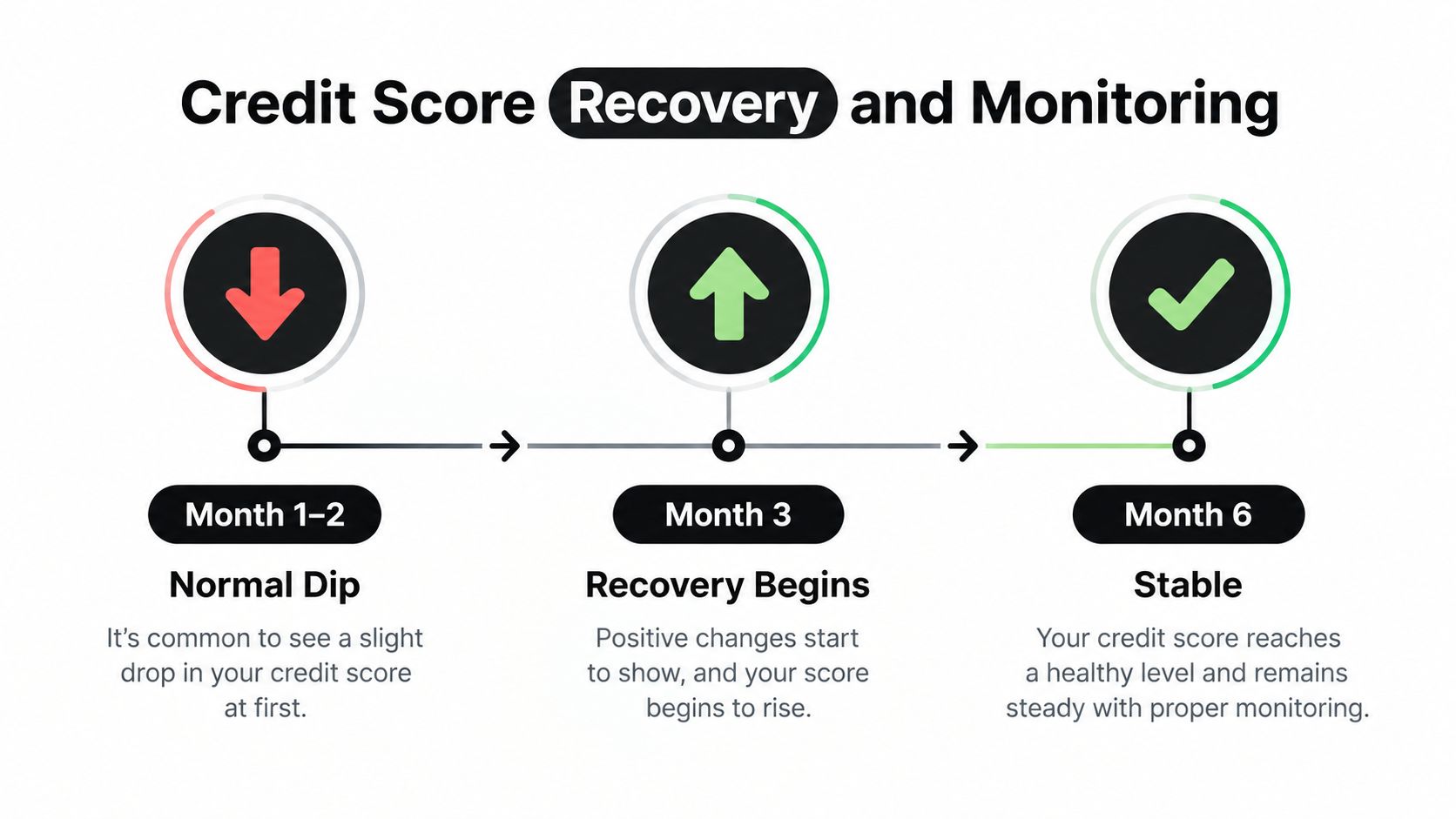
The score drop is real, but it's generally short-lived. Major scoring guidance describes the movement as a normal response to account closure, and recovery often occurs within one to two months as bureau records update (FICO's explanation of installment-loan payoff effects). The paid loan may still remain visible on the credit report, so the account hasn't necessarily vanished.
Practical rule: A lower score after payoff calls for a report check, not an immediate decision to keep expensive debt open.
How FICO Calculates Your Score
A FICO Score is a weighted snapshot of a borrower's credit file. It evaluates payment behavior, debt levels, account age, credit types, and recent applications. A loan payoff can change several of those inputs at once, so a lower score does not mean repayment was irresponsible.
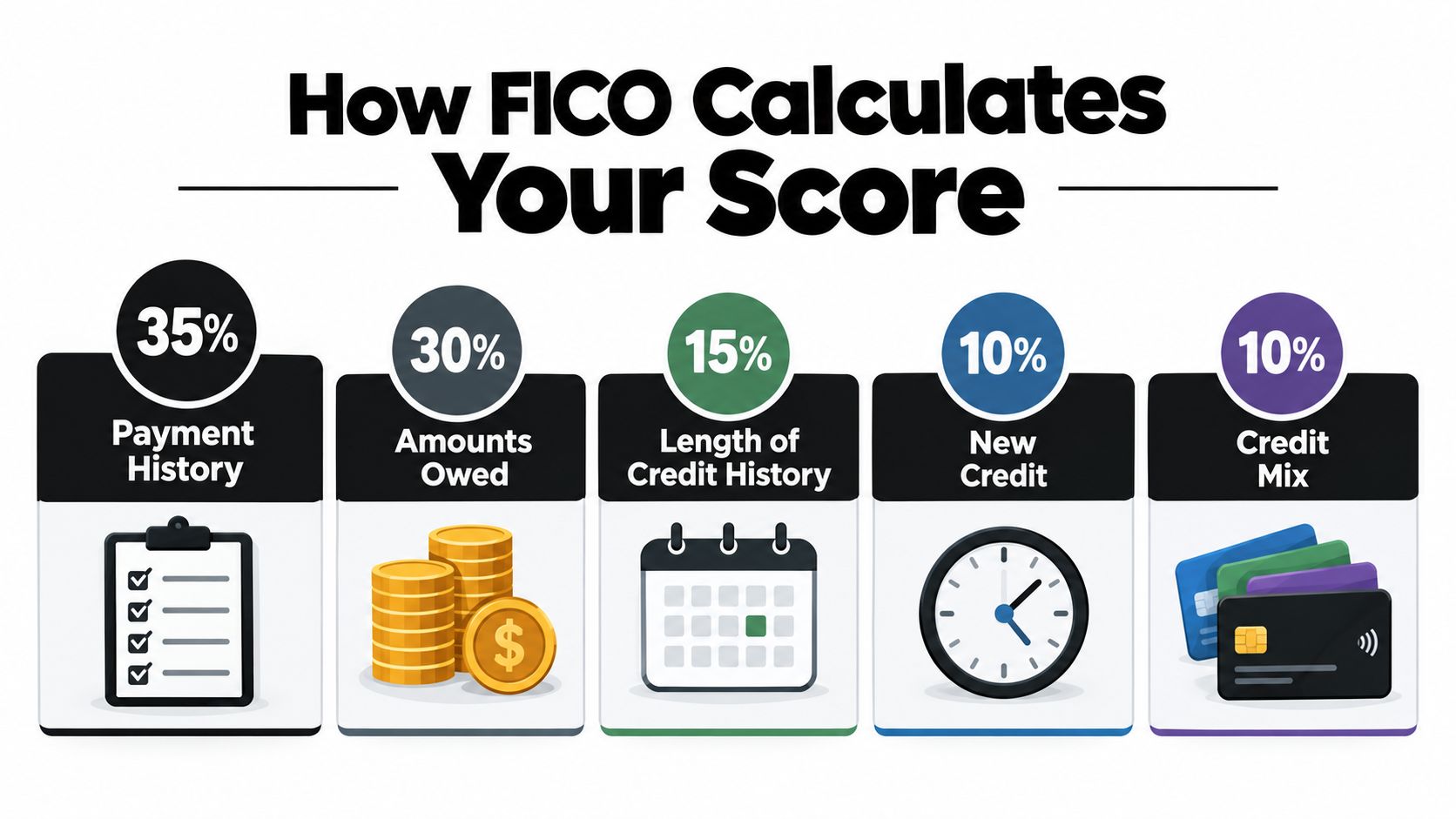
FICO assigns 35% to payment history, 30% to amounts owed, 15% to length of credit history, and 10% each to credit mix and new credit, according to FICO.
Payment history carries 35%
This factor records whether each account was paid on time. Paying off a loan in good standing adds no late mark and does not erase the account's positive payment record immediately. The payoff can affect other parts of the file, while payment history remains tied to the borrower's past record.
Amounts owed carry 30%
FICO reviews overall debt and pays close attention to revolving utilization. For a credit card, utilization compares the reported balance with the credit limit. A card with a $300 balance and a $1,000 limit uses 30% of that limit. Paying off an installment loan may not lower card utilization, and new card spending can raise it separately.
Length of history carries 15%
This factor reflects how long accounts have been established and how the file has developed over time. A closed account in good standing stays on the report for up to 10 years, so its history does not disappear immediately. However, closing an older active account can change the profile used for current accounts. The credit-utilization and account-age discussion provides related context on how account closure may affect scoring.
Credit mix carries 10%
Credit mix reflects the types of accounts in the file, such as installment loans and revolving credit. Paying off the only active installment loan can leave fewer account types in current use. Experian's explanation of paying off an installment loan describes why that change may affect a score. Borrowers can use this guide to reading credit reports as a landlord to identify account types, balances, statuses, and dates.
New credit carries 10%
This factor considers recent applications and newly opened accounts. A payoff alone is not a new-credit event. Opening replacement accounts soon afterward can create a separate change in the file.
A payoff planner such as Toya AI can sequence payments instead of closing every affected account at once. That approach helps preserve a healthy mix, utilization pattern, and age profile while the debt balance falls.
The Three Scoring Factors a Payoff Hits Hardest
A borrower can pay off a loan, see total debt fall, and still watch the score move down. The reason is structural: scoring models are reviewing the shape of the file, not only the amount owed. The three areas most likely to react are credit mix, account age, and amounts owed, especially revolving utilization.
Credit mix loses an installment account
Consider a file with one credit card and one auto loan. Before payoff, it shows both revolving and installment credit. After the auto loan closes, the card may be the only active account type. The borrower's payment behavior has not suddenly become worse, but the file now shows less variety.
Credit mix carries 10% of a FICO Score (Equifax explains how losing an installment account can affect mix). The change usually matters more when the paid loan was the only installment account, especially on a thin file. A payoff planner such as Toya AI can sequence payments so several accounts do not change at the same time, helping preserve a balanced profile while debt declines.
Account age can change without erasing the report
Suppose an auto loan has been open for five years and is the oldest active account. Closing it can change the age profile used for active accounts, particularly when the next-oldest account is much newer. The active portion of the file may then look younger.
The reported history does not vanish immediately. A paid loan in good standing can remain on a credit report for up to 10 years after closure, according to Experian's explanation of closed paid loans. The short-term response is more closely connected to losing an active account than to losing the account's entire history.
Utilization depends on the remaining cards
Installment and revolving balances work differently. Paying an installment loan to zero reduces that loan balance, but it does not lower a credit card's balance relative to its limit. If a borrower uses the freed-up monthly cash for larger card purchases, card utilization can rise even while total debt falls.
That distinction prevents a common misunderstanding. Paying down a loan does not automatically create more available card credit. Card utilization changes when reported card balances or limits change. A borrower can review what a credit utilization ratio means before adjusting card spending or payment timing.
The factors can overlap, but they do not carry the same effect in every file. Mix may react because an installment account closed. Age may shift because the oldest active account changed. Utilization may stay almost the same after an installment payoff, then move later if card balances increase.
| Factor | Weight | Before Payoff | After Payoff | Typical Point Move |
|---|---|---|---|---|
| Credit mix | 10% | Revolving and installment credit are active | The installment account may close | Often a small dip when it was the only installment account |
| Account age | 15% | The paid loan contributes to the active profile | The active-account age profile may become younger | Usually modest and temporary |
| Amounts owed and utilization | 30% | Installment balance and card balances are reported | Installment debt falls, while card utilization may change | Can be more noticeable if card balances rise |
Together, these shifts explain why a temporary dip can follow a responsible payoff. Planning the order and timing of payments helps prevent the file from losing several supporting features all at once.
Real Scenarios That Trigger the Dip
Different files respond differently. The paid loan's role matters more than the loan label itself.
The only auto loan
A borrower finishes an auto loan that was the only installment account on the report. The credit cards remain open, but the file changes from a mix of installment and revolving credit to mostly revolving credit. The likely issue is the loss of mix, not the zero balance.
The thin student-loan file
A recent graduate pays off a student loan on a thin file. The account had supplied installment history and meaningful age, while the remaining accounts were newer revolving accounts. The score may react more sharply than a mature file would because fewer accounts are available to offset the structural change.
The personal-loan payoff beside high card balances
A borrower pays off a personal loan while carrying substantial credit card balances. Total debt falls, but card utilization remains high. In that case, the mix change may cause the dip while utilization stays broadly unchanged, making the report look different without producing a new late payment.
These examples shouldn't be treated as guaranteed point forecasts. Credit scoring depends on the entire file, and the exact response varies by scoring model and bureau data. A borrower can learn more about the distinction between paying debt and changing credit reporting through this explanation of whether paying off collections increases a credit score.
| Loan Type | Affected FICO Factor | Estimated Dip | Recovery Timeline |
|---|---|---|---|
| Auto loan that was the only installment account | Credit mix | Varies by file | Often stabilizes within one to two months |
| Student loan on a thin file | Credit mix and active-account age | Varies by file | Often stabilizes within one to two months |
| Personal loan with high card balances | Credit mix, with utilization still important | Varies by file | Often stabilizes within one to two months |
A later recovery can take longer when card balances remain high or new credit applications create additional changes. The first task is to identify what changed, rather than assuming the payoff caused permanent damage.
Moves That Soften or Prevent the Drop
A borrower can protect the file without keeping unnecessary debt forever. The right approach is a before, during, and after checklist.
Before payoff
- Review the account mix: Check whether the loan is the only active installment account. If it is, a credit-builder loan may preserve installment reporting, but the borrower should compare its cost and terms before opening it.
- Map card utilization: Keep active cards at low reported balances relative to their limits. The plan notes call for balances below 15%, but that threshold should be treated as a practical target, not a promise of a specific score outcome.
- Check the payoff terms: Confirm the servicer's payoff amount, final reporting process, and any applicable account conditions before sending the final payment.
During payoff
Avoid adding several new revolving accounts at the same time. A new card can change the age profile and create a separate new-credit event, making it harder to tell which action moved the score.
A borrower can also choose a staged repayment approach when cash flow allows. Paying down balances in an intentional order may reduce utilization pressure while leaving the installment account active until the rest of the file is ready.
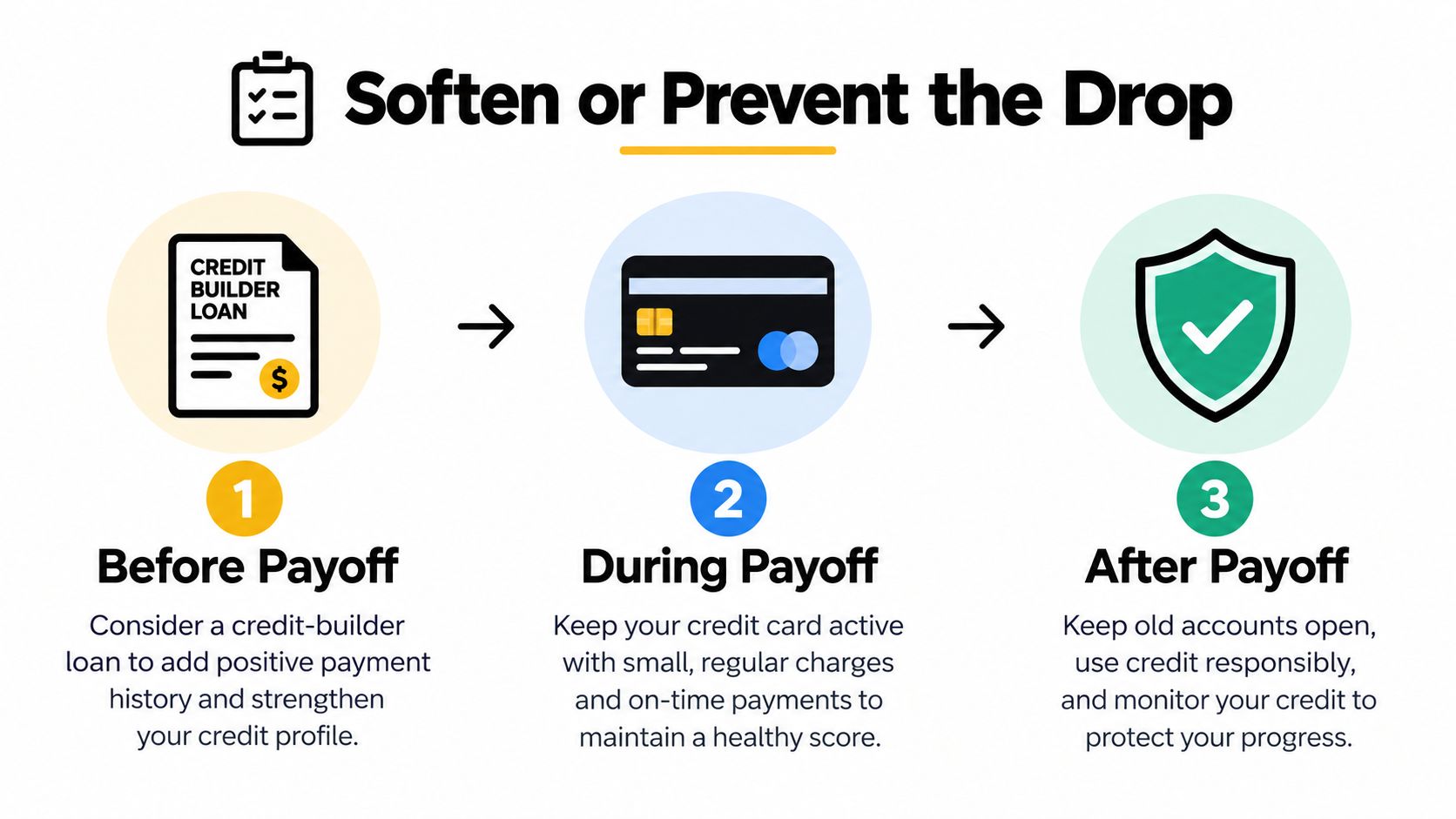
After payoff
Don't request that a paid account be removed from the report. A loan closed in good standing can remain reported for up to 10 years, preserving useful history even though it no longer counts as active installment credit (Experian's account-retention guidance).
Set calendar reminders for 30, 60, and 90 days after the final payment. The reminders should prompt a review of the balance, account status, remaining card utilization, and any unexpected reporting error. A credit-builder product isn't automatically appropriate, and a borrower shouldn't take on new fees to protect a temporary score number.
Planning the Payoff Without Blindsiding Your Score
Debt payoff doesn't have to mean sending every available dollar to one account on one date. A planner can help the borrower compare the financial benefit of faster repayment with the credit-file effect of closing an account.
A payoff planner such as Toya AI can organize credit cards and loans by balances, interest rates, due dates, utilization, and cash flow. It can then show how different payment sequences affect the debt-free timeline, monthly interest, and total cost. Account connections use read-only access through supported partners and don't require credit pulls, according to the publisher's product description.
Compare the sequence, not just the target
One option may be to pay the smallest loan first for psychological momentum. Another may be to reduce the card with the highest utilization first, because revolving utilization can affect the score more directly than a falling installment balance. A third sequence may spread extra payments across two installment accounts rather than closing one immediately.
The planner's value is in making those trade-offs visible. A borrower can compare:
- Smallest balance first: Reaches an account closure sooner, but may remove an installment account from the active file.
- Highest-utilization card first: May reduce pressure in the revolving portion of the profile while keeping an installment account open.
- Staged installment payments: Lowers balances without forcing every account to close in the same reporting period.
- Replacement credit planning: Shows whether a credit-builder loan is financially sensible before the existing installment account is paid off.
A borrower can also read how a loan payoff works before choosing a final-payment date. The objective isn't to preserve a score at any cost. It's to avoid an accidental sequence that closes the only installment account while card utilization rises and new accounts appear at the same time.
Watching the Number Recover and Stay Healthy
The first one to two months after a payoff can bring a temporary score dip. That change often reflects the account's new status reaching the credit file, not a missed payment. Keep the final payment confirmation and zero-balance statement so you can prove what was reported.
Day 1
Record the payoff date, final balance, and payment status. These details give you a reference point if the loan later shows an amount owed or a late payment. The account's payment history does not disappear just because the loan closes. Its older on-time payments can continue aging on the file.
Day 30
Check the account's status and balance, then examine what changed in the rest of the file. A closed installment account may affect credit mix, while a card balance can change utilization. Account age may also shift as the scoring system weighs the active accounts differently. Those factors carry different FICO weight, so a small balance change does not explain every score movement.
Day 60
Compare the current report with the report you saved before payoff. Check the lender's name, account status, balance, payment history, and the number of active installment accounts. If any detail is wrong, contact the lender that supplied the information and dispute the error with the credit bureau. Keep copies of statements and correspondence.
Day 90
If the score has not recovered, examine the file rather than reacting by opening new credit. Recheck credit mix if the payoff removed your only installment account. Review utilization if card balances rose, and inspect account ages for an unexpected change. A clean payment record and controlled card balances can still strengthen the file over time, even if the earlier score has not returned.
Toya AI helps borrowers organize debts and compare payoff orders. Its payment planning can show whether sequencing several payments, instead of closing accounts at once, better protects the file's mix, utilization, and age while reducing debt. Visit Toya AI to track debts and plan the payoff sequence.
Ready to start your debt-free journey?
Toya AI builds a personalized payoff plan so you can see your debt-free date and save on interest.
Get Started Free