
10 Best Money Management App Picks Compared for 2026

U.S. credit card balances reached $1.23 trillion in the third quarter of 2025, according to the Federal Reserve Bank of New York. For households carrying those balances alongside other loans, knowing where money went isn't enough. The harder question is which payment should come next without leaving too little cash for essentials.
Toya AI's 2026 Benchmark Report found that the average consumer manages 2.2 types of debt simultaneously, and 60% carry credit card debt alongside student or auto loans. A spending tracker can organize purchases beautifully while leaving that payment decision unresolved. That's why the best money management app depends on the job that needs doing first, not the longest feature list.
For someone overspending between paychecks, envelope budgeting may matter more than complex projections. A household coordinating bills may need shared visibility. Someone already budgeting successfully but juggling competing balances needs a loan-by-loan payoff plan.
These picks compare budgeting methods, debt tools, account linking, privacy, and cost through those different situations. Students choosing between manual budgeting and connected-account tools can also compare budgeting apps for college students.
The deciding question: Does the app merely describe the finances, or help its user make the next necessary decision?
Table of Contents
- 1. Toya AI
- 2. Monarch Money
- 3. YNAB
- 4. Rocket Money
- 5. Copilot Money
- 6. Quicken Simplifi
- 7. Empower Personal Dashboard
- 8. PocketGuard
- 9. EveryDollar
- 10. Goodbudget
- Pricing, Free Access, and Debt-Payoff Focus Across Top Money Management Apps
- Matching Your App to Your Debt Situation
1. Toya AI
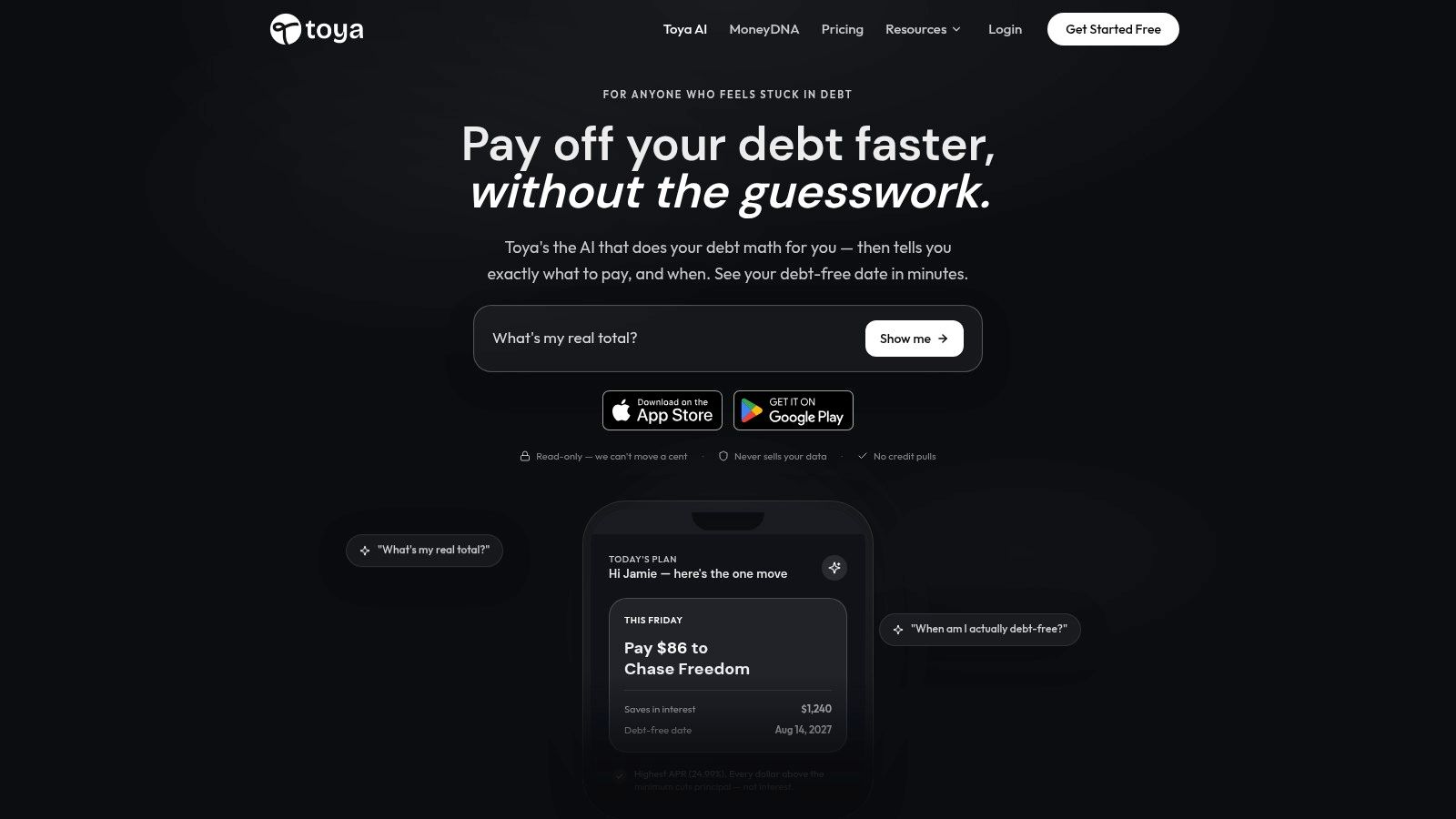
Best for a personalized payoff plan across different debts. This app addresses the gap between seeing balances and deciding where an extra payment belongs. It brings connected credit cards, student loans, auto loans, personal loans, mortgages, and other debts into a dashboard with balances, APRs, utilization, and due dates.
The useful distinction is next-payment guidance. Instead of displaying a debt goal, it recommends which balance should receive extra money and shows the projected effect on interest and the debt-free date. Plans recalculate when circumstances change, including a job loss, a raise, or a new card.
Consider a recent graduate carrying a credit card, student loan, and auto loan. An aggressive card payment might reduce interest but leave insufficient cash for the auto payment. Comparing cash flow with payment obligations makes the recommendation more useful than ranking balances by APR alone.
What's included and what remains separate
The Free plan costs $0 indefinitely, requires no credit card, and includes unlimited account connections, a consolidated debt dashboard, and utilization insights. Every account starts with a 14-day Pro trial without a credit card; Pro adds AI-powered optimization, next-best-action recommendations, and priority support.
- Before connecting accounts: The preview calculator produces a quick debt-free estimate from three numbers.
- After connecting accounts: Real account information supports personalized projections and a clearer payment sequence.
- Privacy controls: Account access is read-only, data is encrypted, and the company states that it never sells user data or makes credit pulls.
The limitation is execution. The app's account access cannot move money, so borrowers should treat it as planning and tracking rather than assume a recommendation has paid a creditor. Payments and rewards are described as forthcoming, and recommendations are informational suggestions, not financial advice or credit counseling.
2. Monarch Money
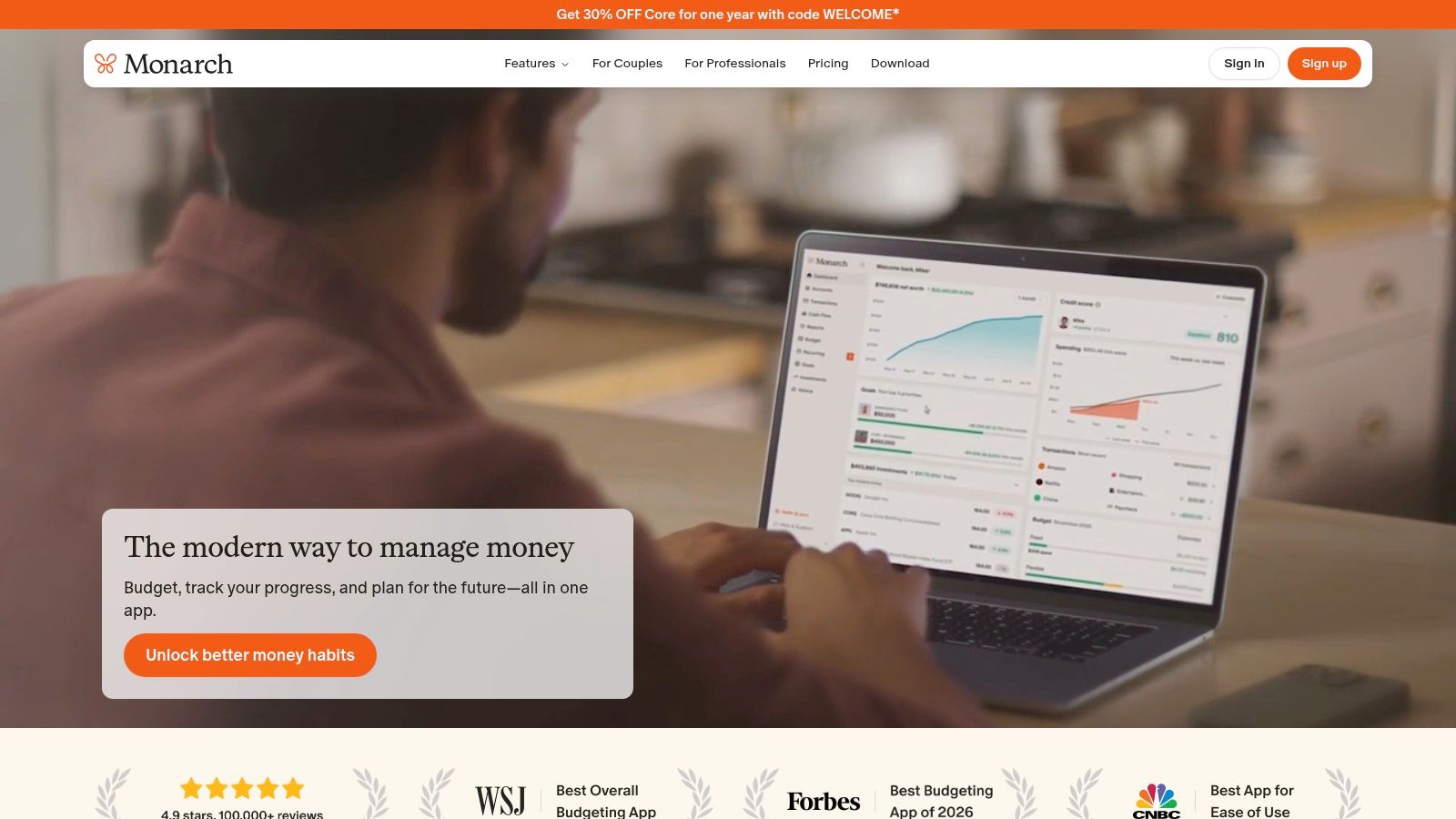
A couple can agree to reduce debt and still disagree about how much cash is available. Monarch Money fits households that need a shared financial picture before they can coordinate payments.
It combines connected accounts, categorized transactions, budgets, upcoming bills, investments, net worth, and savings or debt-paydown goals. Household sharing lets a partner participate without maintaining a separate financial system. Web and mobile access make it suitable for a household whose members review money differently.
For example, partners managing a mortgage and credit cards can review upcoming obligations alongside spending and investments. That helps prevent a payment plan built around only the accounts visible to one person.
Strong household visibility, broader than debt planning
Monarch Money lists Core at $99.99 annually or $14.99 monthly after a 7-day trial, and says it connects to more than 13,000 institutions. It has no permanent free plan, so the subscription needs to earn its place through regular household use.
- What works: Shared budgets, custom reports, transaction categories, and debt goals bring household decisions into a common view.
- Privacy position: The company says it shows no ads and doesn't sell financial data.
- Where it falls short: Debt goals don't make the dashboard a specialized adaptive payoff service.
Monarch is a strong fit when coordination is the obstacle. It's less compelling for someone who already understands household spending and only needs to determine which loan deserves the next extra payment.
3. YNAB
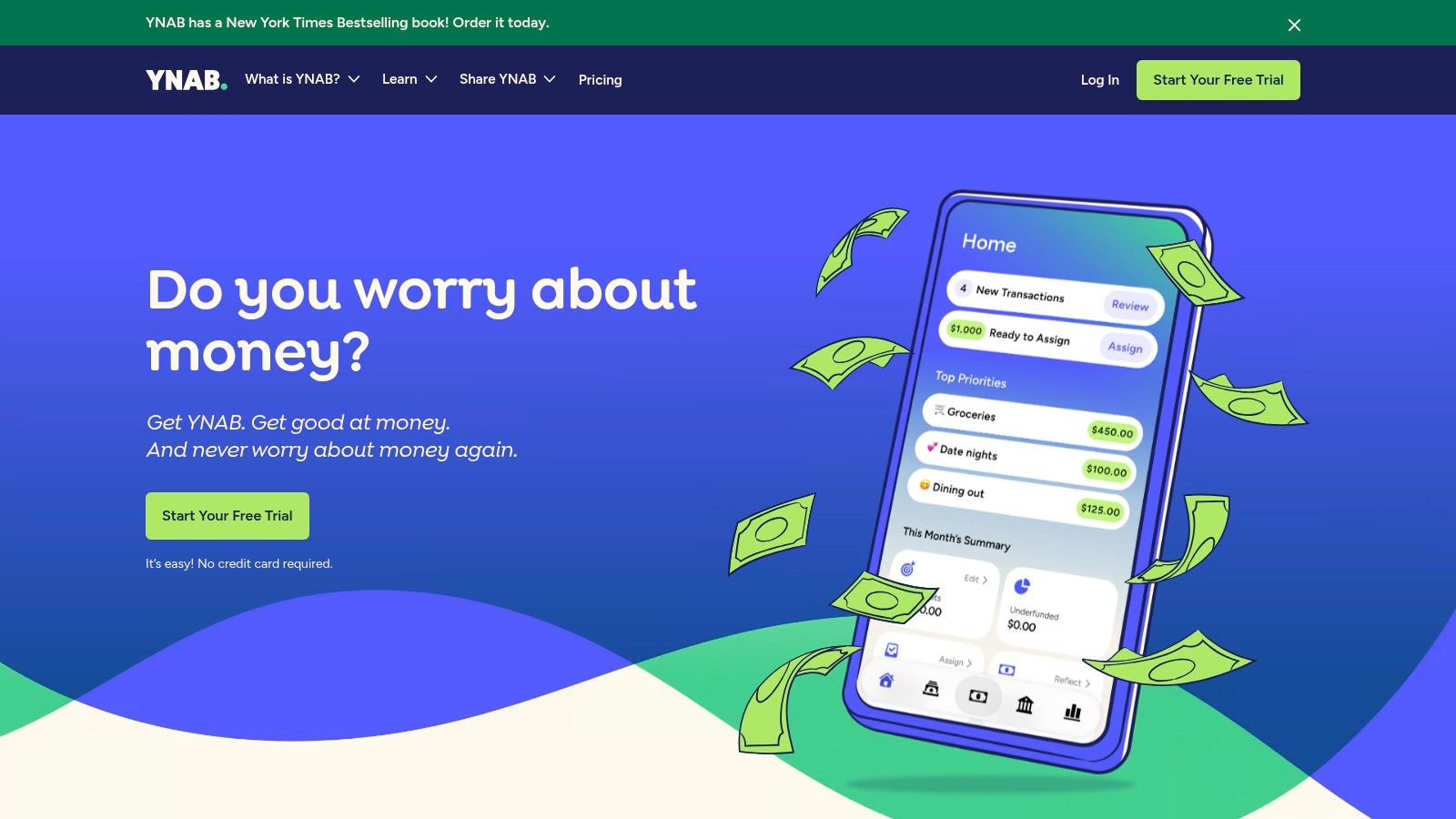
YNAB is for active decisions before spending, not passive explanations afterward. Its zero-based approach assigns available money to planned uses, including bills, groceries, savings, and debt payments.
That distinction matters for someone who repeatedly intends to pay extra toward a card but spends the surplus first. Allocating money when it arrives makes the debt payment an explicit commitment rather than whatever remains at month's end. Account syncing or manual entry supports the process, while goals, educational resources, workshops, and an integrated loan calculator add structure.
YNAB costs $109 annually or $14.99 monthly, offers a 34-day trial, allows sharing with up to six people, and lets eligible college students apply for a 365-day free trial.
The method requires participation
A graduate with variable shifts can assign only money already available, reserve essentials, and then fund a debt payment. That's more reliable than budgeting around income that hasn't arrived.
Choosing the payment target remains a separate decision. A comparison of debt snowball and avalanche methods helps distinguish motivation from interest-cost priorities.
A budget determines how much can go toward debt. A payoff strategy determines where that money should go.
The trade-off is upkeep. Transactions still need review, categories need adjustment, and the method won't suit someone who wants an app to operate largely unattended. There's no ongoing free plan, so its value depends on maintaining the routine rather than merely connecting accounts.
4. Rocket Money
Best for finding recurring expenses that could fund debt payments. Rocket Money is useful when the immediate obstacle isn't choosing between loans, but discovering where the potential surplus keeps disappearing.
The app combines spending reviews, subscription tracking, recurring-charge visibility, and bill reminders. A household paying for overlapping entertainment services can use that visibility to identify cancellations, then deliberately redirect the released cash toward debt. Merely finding the charge doesn't produce savings, and merely cancelling it doesn't guarantee a larger payment.
Rocket Money offers a free plan, variable Premium pricing set during signup, and a listed Premium+ price of $15 monthly. Paid features vary by tier and can include expanded budgeting, goals, account syncing, an AI financial assistant, and bill negotiation.
Separate expense reduction from payoff planning
- Start with the free tools: Review spending, subscriptions, and reminders before paying for extra automation.
- Evaluate negotiation separately: Fees and eligibility vary by service and membership tier.
- Close the loop: Add any confirmed savings to a specific debt-payment allocation.
The app isn't a detailed loan-by-loan payoff planner. A cancelled subscription doesn't answer whether an overdue loan, a high-interest card, or an approaching minimum payment needs attention first.
Its reminders can support payment organization, but borrowers juggling several creditors should also understand what effective due-date tracking software should surface. Rocket Money works best as an expense-cleanup tool, not as the sole system for managing a complicated repayment sequence.
5. Copilot Money
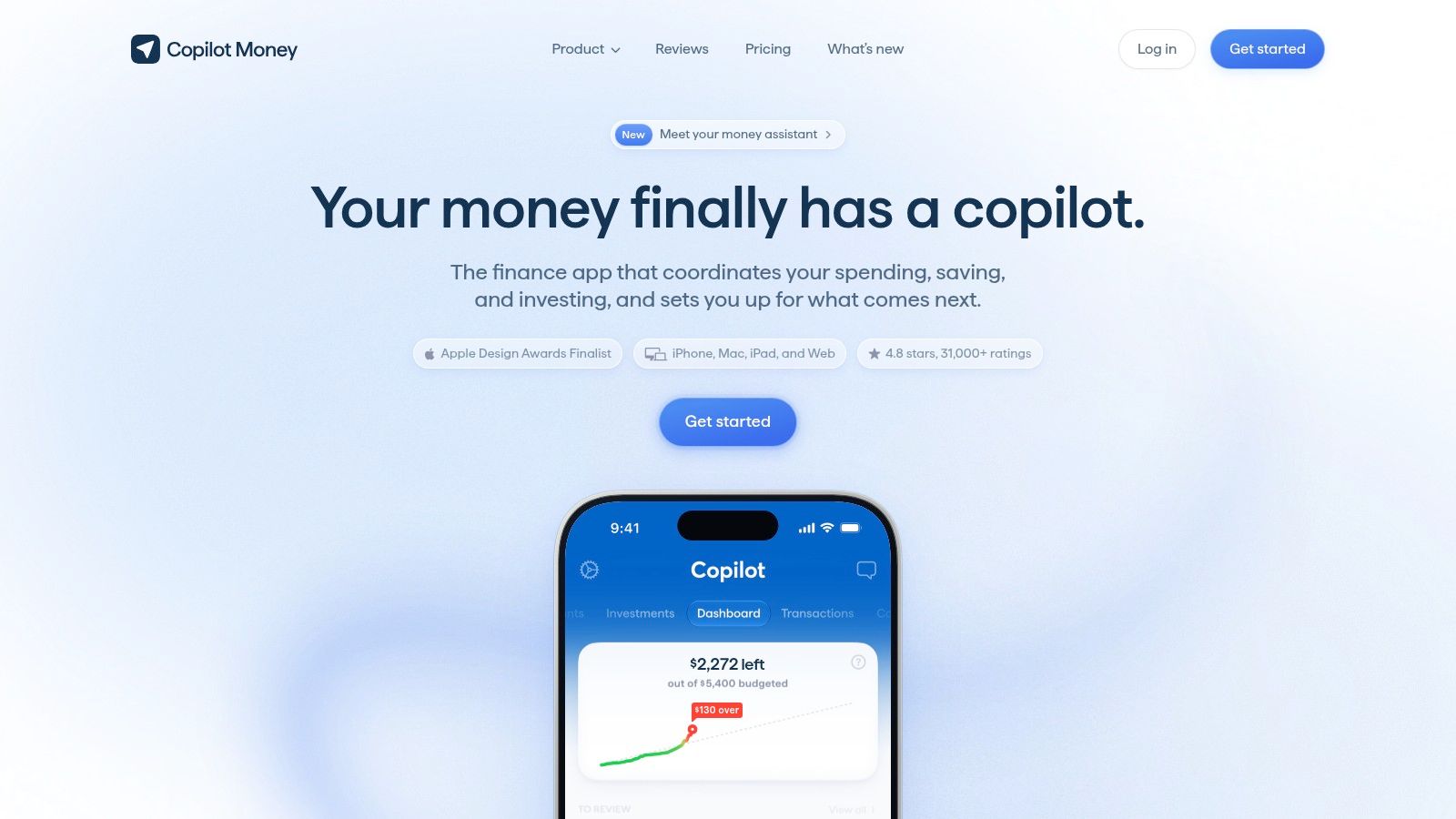
Some borrowers don't need stricter envelopes. They need less time spent sorting transactions. Copilot Money suits automated financial monitoring, combining spending, cash flow, investments, subscriptions, and net worth.
Its transaction categorization learns from user corrections, reducing repeated sorting work. Web, iPhone, iPad, and Mac access support routine review across devices. The company positions the product around U.S.-based accounts, which limits its usefulness for households with finances abroad.
Copilot Money lists an annual subscription at $109 with a one-month trial, and reports a 4.8-star App Store rating from more than 31,000 reviews. Those ratings aren't evidence of better debt outcomes; the relevant question is whether its automation produces a financial view the subscriber will maintain.
Good monitoring doesn't equal payment guidance
For example, a professional with regular income can review subscription charges, correct categories, and watch cash flow without rebuilding a spreadsheet. That can expose spending that crowds out extra payments.
- Strength: Automated organization reduces routine transaction-management work.
- Security position: The company says integrations are read-only, it shows no ads, and it doesn't sell financial data.
- Debt limitation: It isn't a dedicated payoff planner and doesn't provide credit monitoring or personalized financial advice.
There's no permanent free tier. Copilot makes sense when reducing tracking friction is the main job, but it doesn't replace a payment-priority system for someone deciding among several loans.
6. Quicken Simplifi
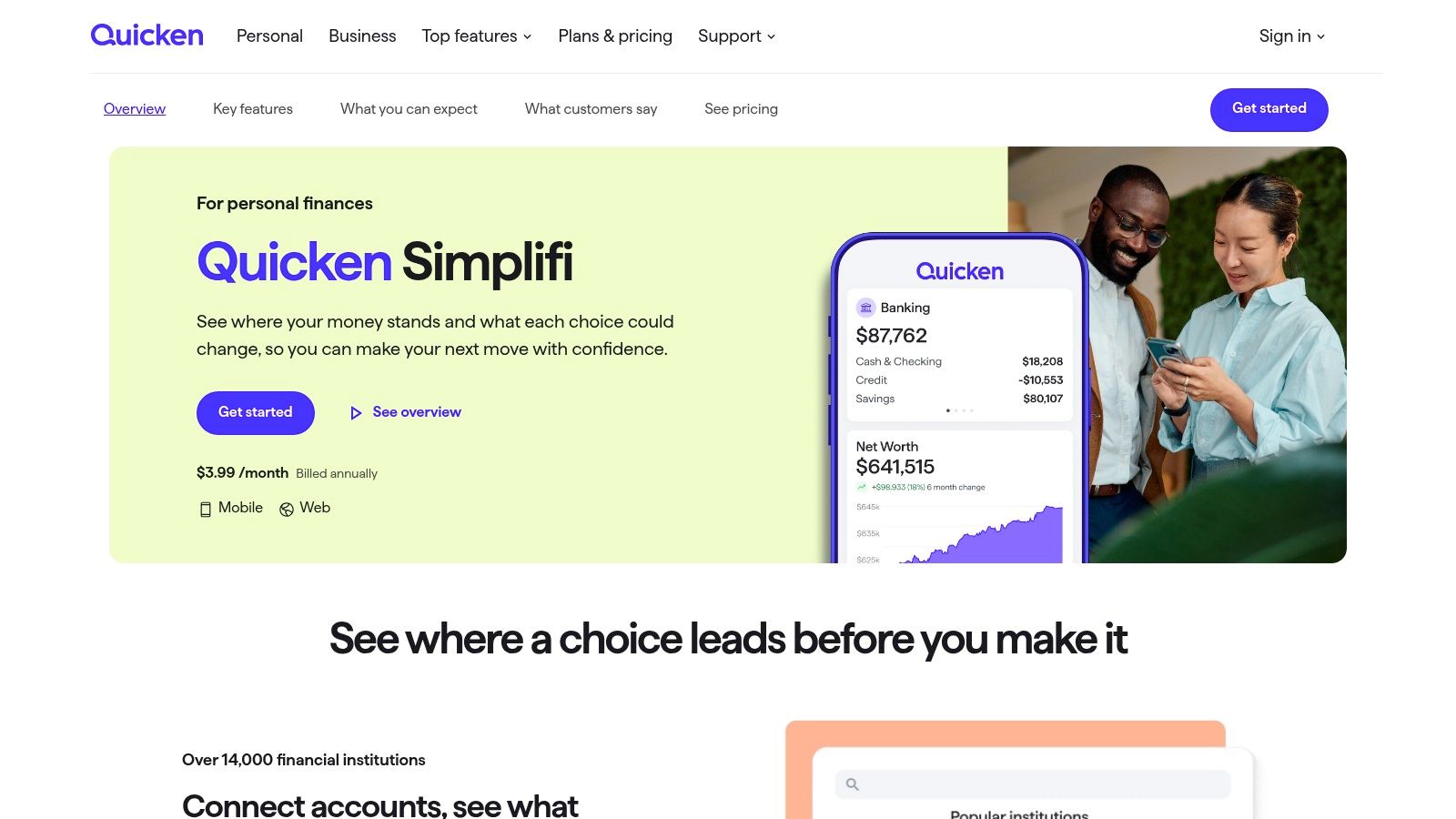
Quicken Simplifi fits the borrower asking what will remain after upcoming obligations. Its Spending Plan separates income, bills, subscriptions, planned spending, goals, and other spending without requiring a strict zero-based method.
That forward-looking view is useful when today's bank balance looks comfortable but rent and loan payments are approaching. Connected bank, credit-card, loan, and investment accounts help organize the picture, and access can be shared with a partner or family member.
Quicken Simplifi lists $3.99 monthly, billed annually, with cash-flow projections extending up to 12 months. It's a paid subscription, not a free budgeting app.
Forecast the cash before committing it
Say a household receives income unevenly through the month. Before sending an extra card payment, it can review expected bills and planned spending to avoid creating a shortage before the next payday.
A useful cash-flow forecast app should make those timing conflicts visible. Simplifi's flexibility works for people who want spending boundaries without assigning every available dollar.
Practical rule: An extra debt payment isn't affordable merely because the checking account can cover it today.
The limitation is input accuracy. Incorrect recurring-income assumptions or missing bills can make available spending look healthier than it is. Simplifi focuses on general money management rather than multi-loan optimization, so it helps establish the payment capacity more directly than the best destination for that payment.
7. Empower Personal Dashboard
A borrower can have substantial retirement assets and still struggle with credit card cash flow. Personal Dashboard is strongest when debt needs to be viewed alongside investments and retirement accounts, rather than treated as the entire financial picture.
The Empower Personal Dashboard provides free account aggregation, spending tools, net-worth views, portfolio information, and retirement analysis. Optional investment-management services are separate and may carry fees.
For a household managing investment accounts, a mortgage, and consumer debt, that consolidated view can reduce fragmented recordkeeping. It also helps distinguish long-term assets from the cash available for upcoming obligations.
Use the dashboard for context
- Best use: Monitor assets, liabilities, investments, and retirement information together.
- Budgeting limitation: Spending tools are available, but investment and retirement analysis are more central to the product.
- Service distinction: Free dashboard access isn't the same as enrolling in paid wealth management.
A positive net worth doesn't automatically make an extra loan payment affordable. A retirement balance and a checking balance serve different purposes, and a debt decision still needs a review of income, essentials, and payment deadlines.
Account information can also depend on financial institutions and third-party providers. When a balance appears stale, the borrower should reconcile it against the institution's own records before making a decision.
This tool is a useful financial overview, particularly for investors. It's less suitable as the main tool for someone who needs spending discipline or an adaptive sequence of debt payments.
8. PocketGuard
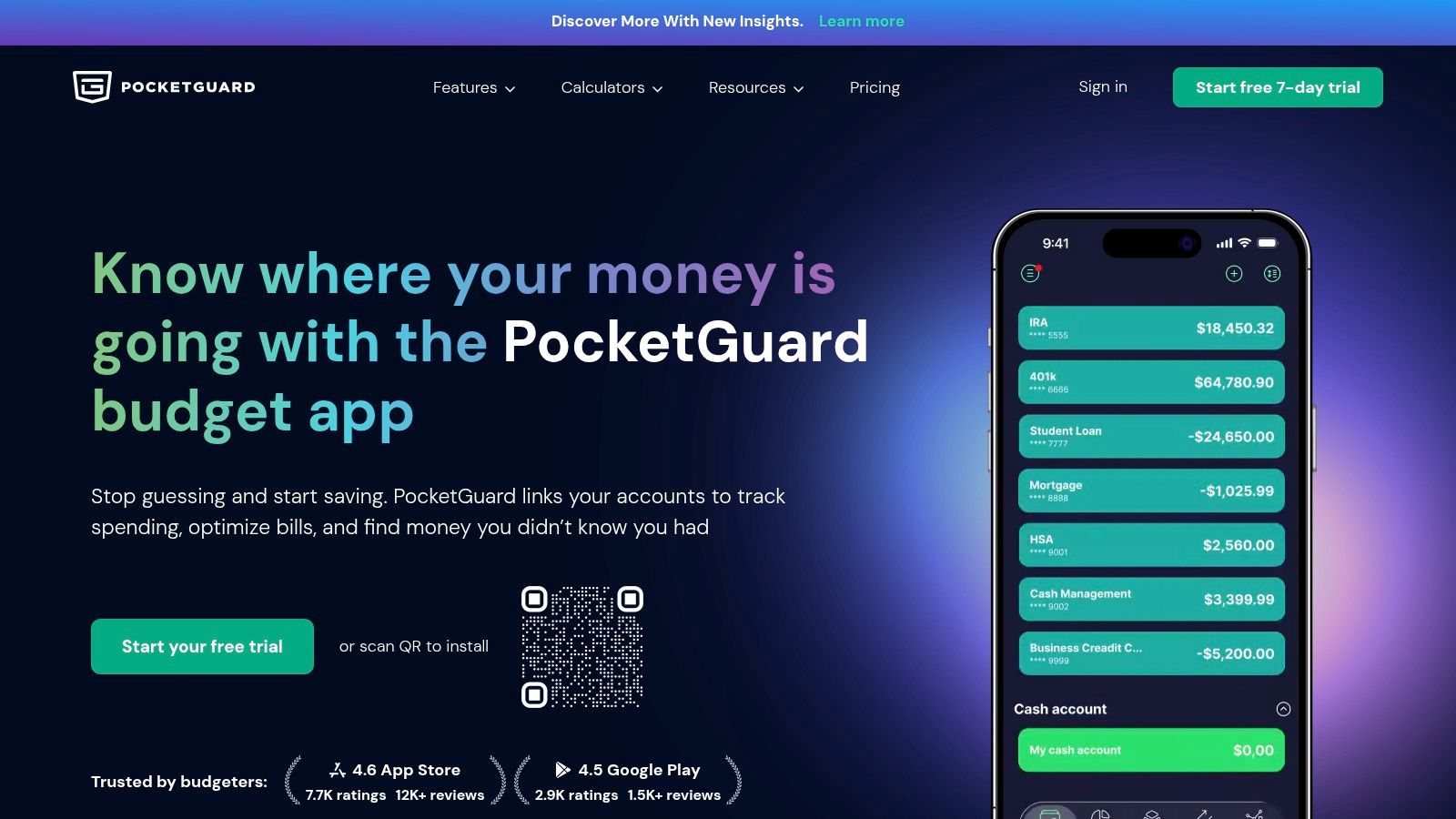
PocketGuard combines a remaining-to-spend view with paid debt-payoff planning. That makes it relevant when a borrower needs a clear spending boundary and more debt structure than an ordinary transaction tracker provides.
It organizes bills, planned spending, savings goals, recurring charges, and category budgets. Leftover or custom budgeting strategies and rollover options provide flexibility, while web and mobile access includes Apple Watch support.
PocketGuard lists Premium at $74.99 annually, $12.99 monthly, or $149.99 for lifetime access, with a 7-day trial and listed U.S. and Canadian connectivity. Its pricing page doesn't list a permanent free plan.
A spending allowance still needs complete inputs
Consider a parent trying to avoid adding new card purchases while paying down an existing balance. A visible spending allowance can be easier to follow than a detailed set of category reports. The paid debt planner adds relevance for someone who also wants to organize repayment.
- What works: A straightforward remaining-to-spend view paired with savings and debt tools.
- What needs attention: Missing bills, inaccurate income, or incomplete account details can undermine the spending figure.
- What to test: Whether the payoff estimates reflect the household's actual minimums, rates, and available cash.
Lifetime pricing changes the payment structure, not the quality of the underlying account information. PocketGuard is a sensible middle ground for spending control plus debt planning, but users still need to examine how its recommendations respond to cash-flow changes.
9. EveryDollar
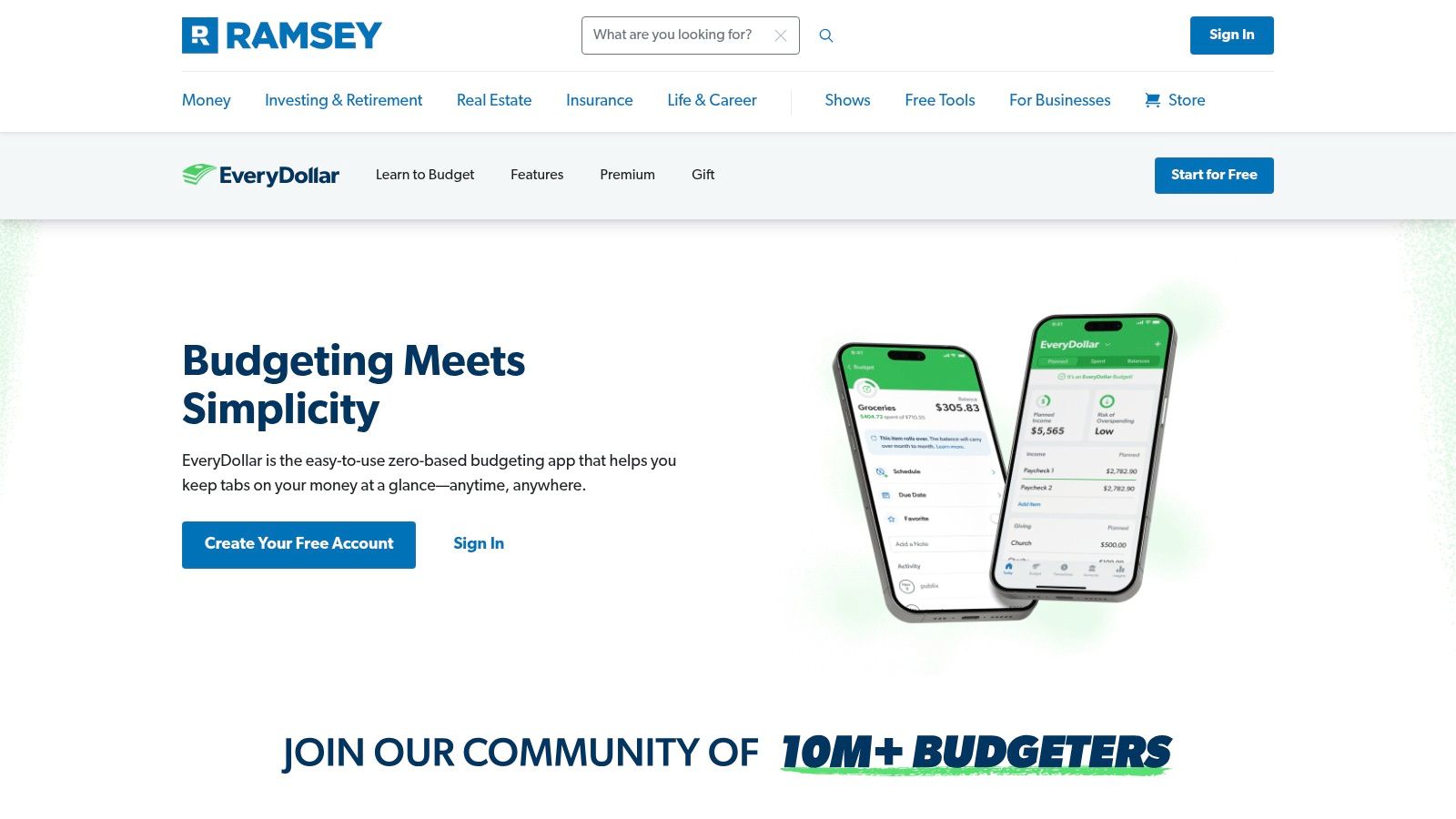
EveryDollar gives debt payments an explicit place in a zero-based budget. Its free version supports monthly budgets, manual transaction tracking, categories, and bill due dates, making it practical for someone willing to exchange manual effort for lower software costs.
Premium adds bank syncing, automatic imports, paycheck planning, reports, goals, and a financial roadmap that tracks debt-free progress. The structure is useful for a household that needs a repeatable plan rather than another set of spending charts.
EveryDollar lists Premium at $79.99 annually or $17.99 monthly, with a 14-day trial for eligible new users, and says it supports more than 13,000 banks and credit unions.
Manual budgeting can be a deliberate choice
For example, a borrower can place rent, food, minimum payments, and an extra debt payment into the budget before discretionary categories receive funding. Recording purchases manually can keep those trade-offs visible, provided entries stay current.
- Free-plan advantage: Manual budgeting offers a way to test the method without paying for account syncing.
- Premium advantage: Paycheck planning and imports can reduce administrative work.
- Method limitation: Its guidance follows a particular budgeting approach rather than neutrally comparing payoff strategies.
The app won't suit someone seeking passive monitoring. A detailed plan becomes unreliable when transactions go unrecorded or categories stop reflecting actual spending.
Choose EveryDollar for the budgeting routine, not solely for automated account visibility. Its value comes from consistently assigning income before spending it.
10. Goodbudget
Goodbudget is the envelope-budgeting choice for households that need tangible spending limits. Instead of treating the account balance as available money, users allocate funds to virtual envelopes and track purchases against those allocations.
The approach works well when shared discretionary spending keeps undermining debt payments. Partners can agree on grocery, transport, and personal-spending envelopes while reserving money for bills and debt repayment.
Goodbudget offers a free plan with limited envelopes, one account and up to one year of transaction history; Premium costs $80 annually or $10 monthly. Premium adds automatic syncing for U.S. banks, more accounts, and more history, while debt accounts and payoff envelopes are supported on the free plan.
Protect the debt allocation from everyday spending
A household can fund essentials and a debt-payoff envelope before distributing the remainder to flexible categories. If dining spending exceeds its envelope, the household must consciously move money from somewhere else rather than unknowingly consuming the intended debt payment.
Envelope budgeting makes the trade-off visible. It doesn't remove the need to make it.
The main cost is attention. Allocations need updating, purchases need recording or review, and shared users need consistent habits. Free-plan limits on envelopes, accounts, and device syncing can become restrictive as household complexity increases.
Goodbudget isn't a substitute for adaptive interest-cost modeling across several loans. It's a practical way to protect the money already assigned to repayment, particularly for a small budget or a household that benefits from visible category boundaries.
Pricing, Free Access, and Debt-Payoff Focus Across Top Money Management Apps
Prices matter, but the better comparison is what the free tier or subscription helps you do. A spending tracker can show where money goes; a debt-focused tool should also help you plan payments across balances.
| Item | Starting Price | Free Plan | Debt-Payoff Focus |
|---|---|---|---|
| Toya AI | Free plan ($0, unlimited account connections); 14-day Pro trial, then Pro adds AI-powered payoff optimization, next-best-action recommendations, and priority support | Yes; connect unlimited accounts and track debts at no cost, with no time limit | Personalized payoff plan, payment recommendations, and projections |
| Monarch Money | $99.99/year or $14.99/month | No permanent free plan | Debt-paydown goals; not a specialized payoff planner |
| YNAB | $109/year or $14.99/month | 34-day free trial | Budgeting tools and loan calculator support debt payments |
| Rocket Money | Free; Premium pricing varies | Yes | Helps identify expenses to redirect; no loan-by-loan payoff plan |
| Copilot Money | $109/year | No permanent free tier | Not a dedicated debt-payoff planner |
| Quicken Simplifi | $3.99/month, billed annually | No | General money management; no multi-loan payoff optimization |
| Empower Personal Dashboard | Free | Yes | Tracks loans alongside assets; limited payoff focus |
| PocketGuard | $74.99/year, $12.99/month, or $149.99 lifetime | No permanent free plan listed | Paid plan includes debt-payoff planning |
| EveryDollar | Free; Premium $79.99/year or $17.99/month | Yes | Tracks debt-free progress; budgeting-led approach |
| Goodbudget | Free; Premium $80/year or $10/month | Yes | Debt accounts and payoff envelopes available on free plan |
For a reader who mainly needs to track balances, a free dashboard may be enough. Toya AI's free plan combines unlimited account connections with debt tracking, while its Pro trial offers payoff optimization and next-action recommendations. Its focus is deciding how to approach connected debts, rather than recording spending.
The trade-off is clear across the list: budgeting tools help direct spending toward repayment, while dedicated payoff planning helps compare what to pay next. Choose based on the job you need done first, and whether that tool's free access or paid features fit your situation.
Matching Your App to Your Debt Situation
The starting point is the main problem. Someone who needs to see every dollar should choose a budgeting method they'll maintain; someone who needs to decide which debt to pay first should prioritize payoff timelines, interest estimates, and cash-flow protection. Those are related jobs, but they aren't interchangeable.
Debt-focused selection matters because 45% of U.S. credit-card adopters carried an unpaid balance in both 2024 and 2025, according to the Federal Reserve Bank of Atlanta's consumer-payment report. A polished spending dashboard doesn't, by itself, resolve a persistent balance.
Match the tool to the obstacle
- Spending keeps exceeding the plan: YNAB, EveryDollar, or Goodbudget provides an active budgeting structure.
- Partners lack a shared picture: Monarch Money supports household coordination.
- Recurring charges consume the surplus: Rocket Money helps identify expenses to review.
- Tracking takes too much effort: Copilot Money emphasizes automated organization.
- Bill timing causes shortages: Quicken Simplifi offers a forward-looking Spending Plan.
- Debt needs investment context: That option brings liabilities and assets together.
- Spending limits and repayment both matter: PocketGuard combines those functions.
- Payment priority remains unclear: An adaptive debt-focused planner is the closer fit.
Many readers can start free and upgrade only after identifying a specific limitation. The featured planner's founder emphasizes that people stuck in debt need a clear plan they can trust more than another budgeting app. Its unlimited free tracking and no-card-required trial provide a way to evaluate that distinction before paying.
Privacy deserves equal attention. 59% of U.S. adults surveyed in February 2025 cited data privacy and security as major barriers to AI-personalized financial services, according to Empower's consumer-finance findings. Read-only access, understandable permissions, disconnection controls, retention policies, and data-sharing terms matter more than a vague security badge.
Make the first review practical
After choosing an app, the borrower should connect supported accounts, reconcile balances and APRs against statements, verify minimums and due dates, and set a monthly review. The debt-free date should be reconsidered whenever income or balances change, not treated as a promise.
Larger spending decisions need the same discipline. A household considering transport alternatives can browse no-lock-in car subscriptions, but should compare the full commitment with its existing transport costs before changing the debt plan.
The best money management app is the one that supports the next necessary action without introducing an unsustainable routine. Accurate inputs, protected essential spending, and payments made matter more than feature count.
Toya AI brings connected debts into one dashboard and recommends which payment to make next, showing the projected effect on interest and time to debt-free. Visit Toya AI to preview a payoff estimate, start free debt tracking, and test personalized planning with a no-card-required Pro trial.
Ready to start your debt-free journey?
Toya AI builds a personalized payoff plan so you can see your debt-free date and save on interest.
Get Started Free